Six Paprika Jars, One Honest Answer: Which Types Actually Belong in Your Kitchen
Let's be real about something: most home cooks have at least two jars of paprika in their spice drawer right now, and at least one of them is basically dead. Maybe it's the smoked paprika you bought for a specific recipe three years ago. Maybe it's the generic "paprika" that came with a spice rack set and has been quietly oxidizing ever since.
The paprika category has a space problem. There are legitimately different types — varieties that behave differently, taste different, and serve different purposes — but the marketing around them has gotten vague enough that it's hard to know what you actually need versus what you're just accumulating out of uncertainty.
So here's a direct, no-drama assessment of the main paprika types you'll encounter in US stores, what each one actually does, and whether it earns a permanent spot in your kitchen or belongs in the "buy when you need it" category.
First: Why Paprika Type Actually Matters
Before the breakdown, a quick note on why this isn't just splitting hairs. Paprika varieties differ in three meaningful ways: heat level, smoke presence, and underlying flavor complexity. Those differences show up clearly in food. Using sweet paprika when a recipe wants smoked will give you a completely different dish — not necessarily worse, but genuinely different. Using hot paprika in a dish built for mild will unbalance the whole thing.
Knowing what you have and what it does is basic kitchen literacy for anyone cooking spice-forward food. Which, if you're here, is presumably you.
Sweet Paprika: The One You Actually Need
Keep it. Always.
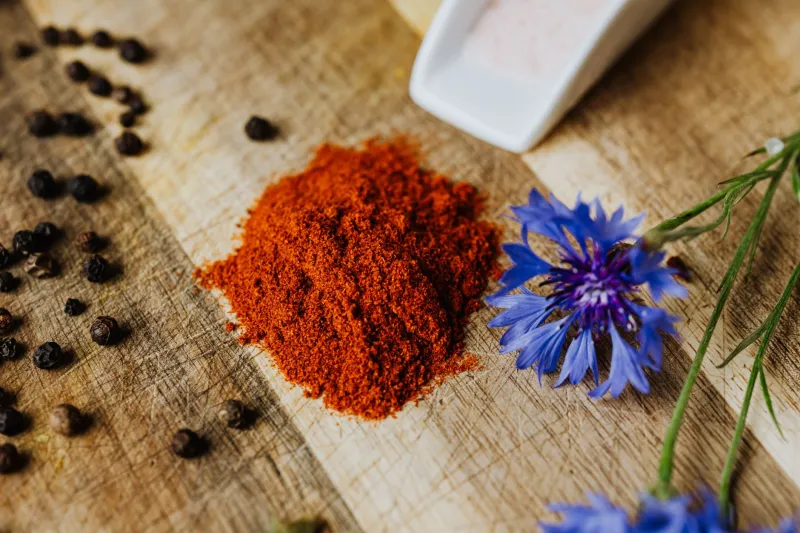
Sweet paprika — sometimes labeled simply as "paprika" on generic jars — is the foundation. It delivers color, mild fruitiness, and that warm, rounded flavor that defines paprika in most classic applications. Chicken paprikash, deviled eggs, potato salad, dry rubs, marinades, soups — this is the workhorse.
Hungarian sweet paprika is the gold standard here, with a more complex, slightly sweeter flavor profile than most generic domestic versions. If you only buy one type, make it a good sweet paprika and keep it fresh. Shelf life once opened: 6-12 months at peak quality, 12-18 months before it starts getting noticeably flat.
Best uses: Braised meats, egg dishes, dry rubs, compound butters, anything where paprika is a primary flavor driver.
Smoked Paprika (Pimentón de la Vera): The One That Changed Everything
Keep it. It's genuinely irreplaceable.
Smoked paprika — specifically Spanish pimentón de la Vera, which is smoked over oak — does something no other paprika can replicate. That smoke character isn't just a flavor note; it's a transformation. It adds a campfire depth to dishes that makes them taste like they've been cooking for hours, or like there's a grill involved somewhere.
This is the paprika that convinced a generation of home cooks that paprika was actually interesting. It's spectacular in anything involving beans, lentils, roasted vegetables, or grilled proteins. It makes a vinaigrette taste smoky without any actual smoke. It's great in compound butter for steaks.
Two subtypes exist: dulce (mild/sweet) and picante (spicy). The dulce is more versatile. The picante is more fun. Ideally you'd have both, but if you're choosing one, go dulce.
Best uses: Paella, shakshuka, roasted cauliflower, bean stews, smoked paprika butter on cornbread, anything where you want smoke without a smoker.
Hot Paprika: The One That Earns Its Spot
Keep it — but only if you actually use heat.
Hot paprika occupies an interesting middle ground between sweet paprika and cayenne. It delivers heat, but it also delivers paprika flavor — that fruity, slightly sweet base note that pure cayenne doesn't have. The result is a more complex heat that builds differently than pure capsaicin.
If you cook a lot of spicy food and you want heat with flavor rather than just fire, hot paprika is genuinely useful. Hungarian hot paprika (erős) is the benchmark. If you rarely cook spicy dishes, though, this one might be a stretch — you can approximate it by combining sweet paprika with a smaller amount of cayenne.
Best uses: Spicy goulash, harissa-style sauces, spicy dry rubs, anywhere you want layered heat rather than blunt heat.
Generic Grocery Store Paprika: The One You Should Probably Upgrade
Replace it — but don't feel bad about using it up first.
The bright red tin or jar labeled simply "paprika" at most grocery stores is sweet paprika, technically — but it's often processed for color consistency over flavor complexity. It's not bad. It's just... not interesting. It does the job in dishes where paprika is more of a background note, and it's perfectly fine for color.
If you already have it, use it. Just don't restock it. A good Hungarian or Spanish sweet paprika from a specialty spice retailer costs maybe $2-3 more and tastes noticeably better. That's an easy upgrade.
Turkish Paprika (Kırmızı Biber): The Wildcard Worth Knowing
Situational — buy it for specific cooking, not as a staple.
Turkish paprika, especially the flaked variety (pul biber or Aleppo-adjacent peppers), is genuinely different from ground paprika varieties. It's typically oilier, slightly fruity, moderately spicy, and has a character that reads as both paprika and crushed red pepper simultaneously.
It's excellent in Turkish and Middle Eastern cooking — on lahmacun, in muhammara, over hummus, in egg dishes. But it's not a direct substitute for ground paprika in most recipes. Think of it as a different ingredient that happens to share the paprika family tree.
If you cook a lot of Turkish, Syrian, or Eastern Mediterranean food, it earns permanent shelf space. Otherwise, it's a "buy for a specific recipe" situation.
Best uses: Middle Eastern dishes, finishing oil for dips and spreads, sprinkling over flatbreads.
The Decision Matrix (Simplified)
Here's the shortcut version:
- Cook mostly American, European, or Latin food? You need sweet paprika and smoked paprika. Everything else is optional.
- Cook spicy food regularly? Add hot paprika to the above.
- Cook Turkish or Middle Eastern food? Add Turkish flake, but it doesn't replace the others.
- Have generic grocery store paprika? Use it up, then upgrade to a proper sweet paprika.
Two jars — a good sweet and a good smoked — handle the vast majority of what home cooks actually make. Three jars if heat is a regular thing. Beyond that, you're buying for specific recipes, not for a general pantry.
One Last Thing About Storage
None of this matters if you're not storing paprika correctly. All varieties degrade fast under heat and light. Keep them in a cool, dark spot — not next to the stove, not on a sunny counter. Check your dates. If a jar is over 18 months old and you can't remember buying it, it's probably gone flat regardless of what type it is.
Fresh paprika of any variety beats stale paprika of any variety. That's the rule that overrides everything else on this list.