Train Your Tongue: How Professional Chefs Taste Paprika Differently — and How You Can Too
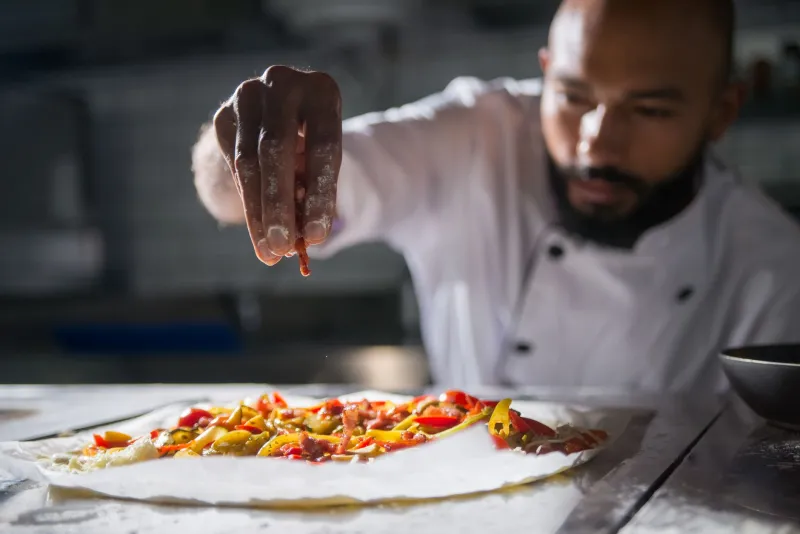
Have you ever watched a chef take a single bite of something, cock their head slightly to the left, and then announce, "Needs a touch more smoked paprika — maybe a quarter teaspoon, not more" — and thought, how on earth did they get that specific? You tasted the same dish. You thought it was fine. Maybe even good. And yet they found something you completely missed.
This isn't magic. It's not even really talent, at least not in the born-with-it sense. It's neuroscience, repetition, and a set of deliberate habits that most home cooks simply never develop. The good news? Your palate is trainable. Here's how to start.
What's Actually Happening in Your Brain When You Taste
Flavor perception is more cognitive than most people realize. When you eat something, your tongue picks up basic tastes — sweet, salty, sour, bitter, umami — but the full experience of flavor is assembled largely in your brain, drawing on smell, texture, temperature, memory, and context all at once. That's why a paprika-dusted chicken thigh tastes different when you're eating it alone at your kitchen counter versus at a dinner party.
Here's the relevant part: your brain is constantly filtering. It runs a kind of triage on incoming sensory information, prioritizing what's novel and downgrading what's familiar. If you've been cooking with the same sweet Hungarian paprika for years, your brain has essentially filed it under "background noise." You register it without really tasting it.
Chefs, on the other hand, have trained themselves — often through formal instruction and years of deliberate practice — to override that filter. They taste actively, not passively. The difference between those two modes is enormous.
The Sensory Adaptation Problem
There's a specific phenomenon at play here called sensory adaptation, and it's worth understanding if you want to level up your palate. When you're repeatedly exposed to a stimulus — a flavor, a scent, even a sound — your nervous system gradually reduces its response to it. It's efficient biology. Your brain doesn't want to waste energy processing things it's already catalogued.
For home cooks who use paprika regularly but casually, this adaptation can create a kind of flavor blindness. You know paprika is there. You might even know roughly how much you used. But the subtle differences between a bright, fruity Moroccan paprika and a deeper, earthier Spanish pimentón? Those nuances get smoothed over by familiarity.
Professional cooks counteract this through what amounts to constant deliberate disruption. They taste things in isolation, compare them side by side, and build a mental flavor library that's detailed enough to spot what's missing or off in a finished dish.
How Chefs Actually Taste (It's Not What You Think)
We asked a few culinary professionals about their tasting habits, and the answers had some consistent threads.
One line cook described tasting paprika straight from the jar before adding it to anything — not to season her food, but just to recalibrate. "I want to know what this jar tastes like today," she said. "Paprika changes. The same brand can taste different depending on when you opened it, how you stored it, what season it is."
A culinary instructor mentioned the practice of tasting spices with plain cooked rice or unsalted broth — neutral vehicles that let the spice speak without competition. "If you taste smoked paprika on a piece of chicken that's already been salted and marinated, you're not really tasting the paprika. You're tasting the whole system."
Another chef talked about what he called "the second sip" — waiting a beat after the first taste before forming an opinion, because the finish and the aftertaste often carry information the initial hit doesn't.
All of these are learnable habits. None of them require a culinary degree.
Practical Exercises to Build a More Refined Paprika Palate
Ready to actually do something about this? Here are exercises you can run in your own kitchen, no special equipment required.
The Side-by-Side Comparison Buy three different paprikas — a sweet domestic blend, a Spanish smoked pimentón, and a Hungarian hot paprika if you can find one. Bloom a half-teaspoon of each in a tiny bit of neutral oil over low heat, let them cool, and taste them on plain white bread or crackers. Take notes. Look for differences in sweetness, smoke, heat, earthiness, and how long the flavor lingers.
The Neutral Vehicle Test Cook a batch of plain white rice. Divide it into small bowls and stir in a pinch of a single spice to each. This strips away the noise of a full recipe and forces you to taste the ingredient on its own terms.
The Palate Reset Before tasting anything you're cooking, eat a few plain unsalted crackers and drink some room-temperature water. This clears residual flavors that can skew your perception — especially if you've been snacking or drinking coffee.
The Retronasal Smell Exercise Taste a small amount of paprika, then exhale slowly through your nose while it's still in your mouth. A significant portion of what we experience as flavor is actually retronasal smell — scent traveling up the back of your throat. Paying attention to that second wave of sensation can reveal complexity you've been bypassing entirely.
The Weekly Tasting Habit Once a week, before you cook dinner, open your spice jars and smell them. Not taste — smell. Your olfactory memory is powerful, and building a strong scent library for your spices makes it much easier to identify them in finished dishes.
The Long Game
Here's the honest part: you're not going to taste like a trained chef after a couple of comparison sessions. Palate development is genuinely cumulative. The chefs who can identify a quarter-teaspoon of smoked paprika in a complex braise have tasted thousands of dishes with that kind of attention. You're starting a practice, not flipping a switch.
But the gap closes faster than most people expect, because the fundamentals aren't complicated. Taste actively. Compare things side by side. Build a vocabulary for what you're tasting — even rough words like "fruity," "dusty," "sharp," or "flat" help your brain store and retrieve flavor information more effectively.
Paprika is actually a great spice to start this practice with, precisely because it has so much range. Sweet to smoky to fiery, bright to earthy, fresh to stale — there's a lot of territory to explore. The more of it you map deliberately, the more of it you'll be able to taste when it matters.
Your tongue isn't the limitation here. Your attention is. And that's something you can change starting tonight.