The Freshness Window: What Six Months of Testing Taught Us About Paprika's Real Shelf Life
Photo: Koala man at English Wikipedia, Public domain, via Wikimedia Commons
The Jar You've Had Since the Obama Administration
Be honest with yourself for a second. When did you buy that paprika? Not the one you got recently — the one that's been sitting in the back of the cabinet, slightly wedged behind the cumin and the cream of tartar you've used twice. The one with the faded label and the lid that's a little too easy to open because it's been opened so many times.
For most American home cooks, that jar is old. Not a little old — genuinely, flavor-destroyingly old. And the frustrating part is that it still looks like paprika. It's still red. It still smells like something. But whether it's actually doing anything useful in your cooking is a different question entirely, and the answer is probably no.
We spent six months paying close attention to how paprika behaves under the storage conditions that real home kitchens actually have — not the ideal conditions that spice companies use to calculate their printed best-by dates. Here's what we found.
What the Label Tells You vs. What's Actually Happening
Most commercially packaged paprika carries a best-by date somewhere between two and four years from the packaging date. That number is calculated under controlled conditions: consistent cool temperatures, low humidity, sealed containers, minimal light exposure. It represents the outer edge of when the product might still be considered acceptable — not when it's at its best.
In a real kitchen, none of those conditions exist. Spices sit near stoves where temperatures fluctuate dramatically. They get stored in drawers next to ovens that radiate heat. They live on open racks where light hits them for hours a day. Every time you open the jar and leave it open while you cook, moisture from steam and cooking vapors gets in. The gap between "acceptable under ideal conditions" and "actually flavorful in your kitchen" is significant.
The honest timeline, based on real-world storage, looks more like this:
- 0 to 6 months after opening: Peak flavor. The color is vivid, the aroma is assertive, and a small amount goes a long way.
- 6 to 12 months after opening: Noticeable decline. Color starts to dull slightly, aroma becomes flatter, and you'll find yourself using more to achieve the same effect.
- 12 to 18 months after opening: Significant degradation. The volatile compounds responsible for paprika's characteristic flavor — the carotenoids, the capsaicinoids, the aromatic esters — have broken down substantially. You're essentially adding color and very little else.
- Beyond 18 months: At this point, the paprika in your drawer is a visual prop, not a functional ingredient. It might make your deviled eggs look red, but it's not contributing flavor.
The Four Enemies of Paprika Freshness
Understanding what kills paprika's flavor helps you make smarter storage decisions.
Heat is the biggest culprit. Paprika's flavor compounds are volatile, meaning they evaporate when exposed to warmth. A spice rack mounted near the stove — one of the most common kitchen setups in American homes — is essentially a slow-motion flavor extractor. Every time you cook, the ambient heat radiating from your burners is nudging your paprika closer to flavorlessness.
Light accelerates the breakdown of carotenoids, which are both the compounds that give paprika its red color and a significant part of its flavor profile. A clear jar on a sunny windowsill will lose color and flavor faster than almost any other storage situation.
Moisture is sneaky. You might think you're careful about keeping lids on tight, but every time you shake paprika over a steaming pan, you're letting moisture into the jar. Over time, this clumps the powder and creates conditions where flavor compounds degrade faster.
Air matters more than most people realize. Every time you open a container, oxygen gets in and starts oxidizing the compounds responsible for flavor. A half-empty jar has more air-to-spice ratio than a full one, which is why the last third of a paprika container always seems flatter than the first two-thirds.
The Simple Audit System
You don't need a chemistry lab to figure out whether your paprika is still worth using. This three-step check takes about 30 seconds.
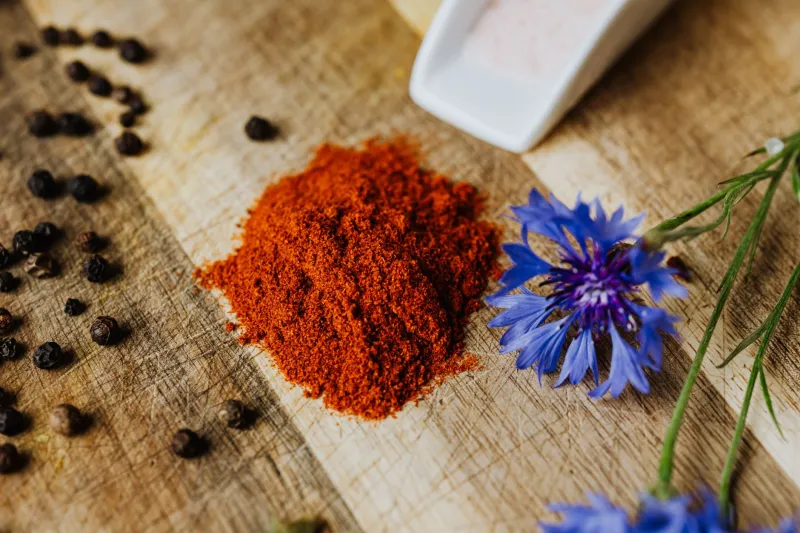
Step 1: Look at the color. Fresh paprika should be a vivid, saturated red — almost brick-like in its intensity. If yours looks orange, brownish, or faded, that's a sign of carotenoid breakdown. The flavor has likely followed the color.
Step 2: Smell it. Open the jar and take a direct sniff — not a polite sniff, an actual deep inhale. Fresh paprika has a clear, immediate aroma: slightly sweet, faintly fruity, with a hint of pepper warmth (more pronounced in hot varieties). If you have to work to smell anything, or if the aroma is vague and dusty, the volatile compounds are gone.
Step 3: Taste a tiny amount. Put a small pinch on your tongue. You should taste something distinct within a few seconds. If it tastes like colored dust, it's done.
If your paprika fails two or more of these tests, replace it. It's not worth cooking with.
Storage Hacks That Actually Work
Move your spices away from the stove. This is the single most impactful change you can make. A drawer on the opposite side of the kitchen, a pantry shelf, or even a cabinet on an interior wall all maintain more consistent temperatures than anything near the range.
Use dark or opaque containers. If you buy paprika in a clear jar or plastic container, transfer it to a dark glass jar. IKEA sells inexpensive dark glass spice jars. This one change can meaningfully extend shelf life.
Buy smaller quantities more frequently. The best paprika is fresh paprika. A 2-ounce tin that you replace every few months will taste dramatically better than a 4-ounce jar you nurse for two years. Specialty spice shops and online retailers like Burlap & Barrel or Diaspora Co. sell smaller quantities with clear harvest and packaging dates — that information is worth paying attention to.
Seal tightly after every use. It sounds obvious, but actually pressing the lid down firmly and making sure it's fully sealed — rather than just resting on top — makes a real difference over time.
Consider the fridge for long-term storage. For paprika you use infrequently, the refrigerator is genuinely one of the best storage environments available. The cold, dark, low-humidity conditions slow oxidation and preserve volatile compounds significantly longer than room-temperature storage. Just make sure the container is airtight to prevent moisture absorption and odor transfer.
The Real Cost of Stale Paprika
Here's the thing nobody talks about when they tell you to clean out your spice drawer: cooking with stale paprika isn't just a neutral experience — it actively makes your food worse. When the spice has no flavor of its own, you add more to compensate, and what you end up with is a dish that's too red, slightly bitter from the oxidized compounds, and still somehow flat.
Fresh paprika, used in the right amount, does something noticeable. It adds warmth, color, and a subtle sweetness or smokiness depending on the variety. That's the version worth cooking with.
The good news is that a quality tin of Hungarian sweet or Spanish smoked paprika costs between $4 and $9 at most grocery stores. Replacing it twice a year — which is the honest cadence for anyone who cooks regularly — costs less than a single mediocre restaurant appetizer. For that price, you get a spice that actually does its job.
That seems like a reasonable trade.