From the Pepper Field to Aisle 7: Decoding the Journey of That $3.99 Jar
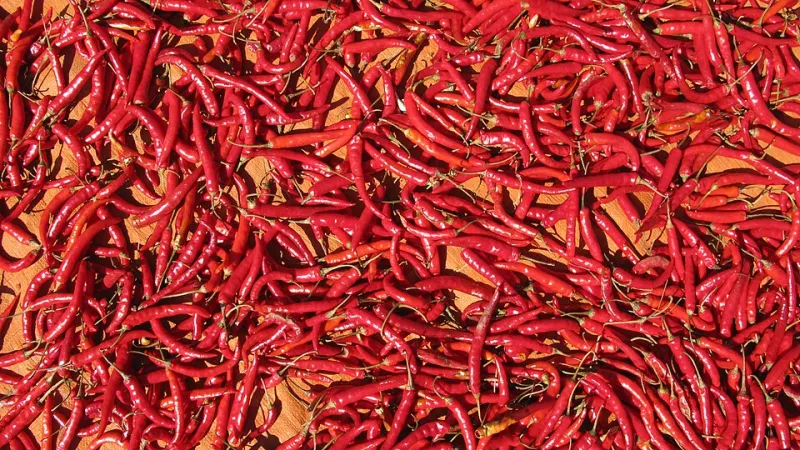
Photo: Vyacheslav Argenberg, CC BY 4.0, via Wikimedia Commons
Stand in the spice aisle of any American grocery store and you'll see paprika prices swing wildly: $2.99 here, $11.99 there, both in similar-looking little jars, both promising the same red. What separates them isn't marketing magic. It's a journey — thousands of miles, several pairs of hands, and a surprising number of decisions that happen long before the jar gets a label.
It Starts With a Pepper, Not a Spice
Paprika comes from Capsicum annuum peppers — mild red varieties bred specifically for their flesh and color, not their burn. The major growing regions read like a passport: Spain's La Vera valley, Hungary's Szeged and Kalocsa regions, and increasingly large-scale production in California's Central Valley and New Mexico, where US-grown paprika has quietly expanded over the past two decades.
Timing matters enormously. Peppers are harvested in late summer and early fall, then dried — and this is where flavor forks dramatically. Spanish pimentón de la Vera is dried over oak smoke, which is why it carries that unmistakable smoky depth. Hungarian and most commodity paprika are dried with hot air or in the sun, preserving sweetness and color without smoke. Same species of plant, radically different end products.
The Mill Is Where the Money Happens
After drying, peppers travel to processors, and here's a fact that surprises most shoppers: the same farm's peppers can end up in jars at wildly different price points. How? It comes down to sorting and processing.
At the mill, peppers are graded by color intensity, flesh-to-seed ratio, and moisture. The deep-red, thick-fleshed top grade gets reserved for premium, often single-origin products. Lower grades — paler, more seed and placenta content, less pigment — get milled into commodity paprika that ends up in store brands and food manufacturing. Seeds and membranes carry most of the heat and bitterness, so how much of that material is included changes both flavor and cost.
There's also the question of freshness at milling. Paprika's volatile aroma compounds and its star pigment, capsanthin, start degrading the moment peppers are ground. A processor who mills in small batches and ships quickly delivers a livelier spice than one whose product sits in a warehouse. That time cost doesn't show up on the label — but it shows up in the jar.
The Middle Miles: Importers, Distributors, and Warehouses
For imported paprika, the journey continues through importers who buy from mills in bulk — often in 50-pound bags or larger containers. From there, product typically moves to US distributors, then to packagers. Sometimes the brand on your jar never touched the spice at all; they buy bulk paprika, package it, and market it. Other brands work directly with specific mills and can tell you the region and even the harvest year.
This chain explains the price gap. A $3 jar likely bought commodity-grade paprika on the open market, possibly milled a year or more ago, with minimal traceability. A $12 jar is more likely single-origin, recently milled, and from a graded top lot. Neither is a scam. But they are not the same product, and pretending they are does your cooking a disservice.
Reading the Label Like an Insider
Once you know the supply chain, labels get easier to decode. Here's what to look for:
- Named origin. "Pimentón de la Vera" or "Szegedi" signals a protected designation and specific processing. "Paprika" alone usually means commodity blend.
- "Smoked" vs. "smoke flavor." Real smoked paprika is dried over wood. "Naturally smoked" or "smoke flavor" on an American shelf-stable product often means liquid smoke was applied — legal, but not the same thing.
- Sweet, dulce, hot, picante. These indicate heat level. Spanish jars use dulce (sweet) and picante (hot); Hungarian uses édes (sweet) and erős (hot).
- Pack or best-by dates. Ground paprika is at its peak for roughly six months to a year. If the best-by date is two years out, the clock started longer ago than you'd like.
- Country of origin line. Legally required, and more informative than you'd think. "Product of Spain" on a smoked paprika means the whole process — growing, smoking, milling — likely happened there.
What This Means for Your Cart
You don't need to buy the most expensive jar. You need the right jar for the job. For a braise or a dry rub where paprika plays backup, a decent mid-tier sweet paprika is fine. For dishes where paprika is the headline — patatas bravas, chicken paprikash, a finishing dust on deviled eggs — buy named-origin, recently dated, and use it faster.
And buy small. The freshest jar at the store is worth less than the freshest spice in your rack. A $5 jar you finish in three months beats a $12 jar that fades in your cabinet for two years.
The next time you're standing in aisle 7 comparing two red jars, you'll know what you're actually looking at: not two prices for one spice, but two different journeys — and now, you know how to read them.