One Jar, Zero Effort: The Paprika Move That Makes Grocery-Store Shortcuts Taste Like You Actually Cooked
Let's be honest about how most of us actually eat on weeknights. There's a rotisserie chicken from the grocery store hot case. There's a pack of deli turkey that was supposed to be for sandwiches but might become dinner. There's a frozen skillet meal that seemed reasonable at the store and now feels deeply uninspiring.
Convenience food has a specific problem, and it's not that it tastes bad exactly. It's that it tastes generic — like it was made for everyone and therefore for no one. It lacks the particular, slightly imperfect quality of something someone actually cooked with intention.
Here's the good news: that gap is smaller than you think. And a $3 jar of paprika, used correctly, can close most of it.
Why Store-Bought Proteins Taste the Way They Do
Rotisserie chickens, deli meats, and frozen proteins are seasoned for broad palatability. The goal isn't bold flavor — it's inoffensive consistency. They're typically under-salted relative to restaurant cooking, and they almost universally lack the caramelized, slightly charred, fat-rendered depth that you get from cooking something yourself in a hot pan.
That depth has a name in food science: Maillard reaction products. It's the browning that happens when protein and heat interact, and it creates hundreds of flavor compounds that don't exist in gently cooked or steamed food. Paprika, when applied correctly, can simulate and accelerate that process — or trigger a version of it — on foods that were never cooked that way to begin with.
It's not a perfect replacement for a proper sear. But it's surprisingly close, and it takes about ninety seconds.
The Technique: Bloom First, Apply Second
The key word here is bloom. If you're just sprinkling paprika onto cold rotisserie chicken or a plate of deli meat, you're getting color and a faint raw spice note. That's not the goal.
Here's the method:
- Heat 1 tablespoon of neutral oil or butter in a small skillet or saucepan over medium heat.
- Add ½ teaspoon of smoked paprika (or a mix of ½ teaspoon sweet + ¼ teaspoon smoked) and stir constantly for 30–45 seconds. The oil will turn deep orange-red and smell intensely aromatic. Pull it off the heat the moment it starts to smell toasty rather than raw.
- Brush, drizzle, or toss this paprika oil over your store-bought protein immediately.
That's it. The fat has extracted and distributed paprika's fat-soluble flavor compounds, and the brief heat has developed the spice's deeper, roasted notes. When it hits your food, it delivers something that reads as "this was cooked with care" rather than "this came out of a plastic container."
Rotisserie Chicken: The Biggest Payoff
Grocery store rotisserie chicken is already a great value, but it has a specific weakness: the skin goes soft in the packaging, and the seasoning on the outside is almost always too mild and too sweet. The paprika oil treatment addresses both.
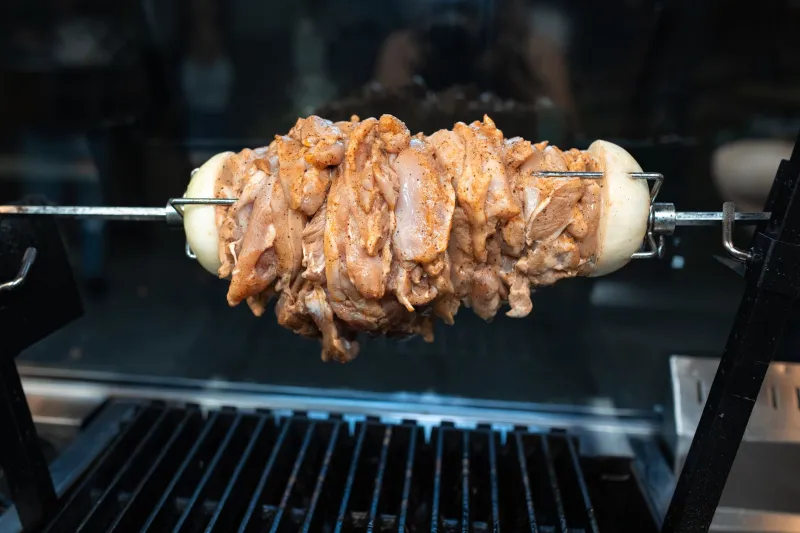
Brush the bloomed paprika oil over the skin and put the chicken (or just the pieces you're eating) under the broiler for 3–4 minutes. The oil crisps the skin back up, the paprika caramelizes slightly, and the whole bird suddenly has a depth of flavor that the original seasoning never provided. A whole chicken serves four. You're spending maybe five minutes total on the upgrade.
Best paprika for this: Smoked Spanish paprika (pimentón de la Vera) is the gold standard here. It adds a woodsy, almost BBQ-adjacent note that makes the chicken taste like it came off a real fire.
Deli Meat: The Underrated Opportunity
This one surprises people. Deli turkey, ham, and roast beef are often dismissed as too processed to be worth upgrading. But a quick pass through a hot paprika-oiled skillet — 60 seconds per side on medium-high — transforms thin-sliced deli meat into something that could pass for pan-seared leftovers.
The edges crisp. The paprika develops. The salt that's already in the meat concentrates slightly. You now have something that works as a legitimate protein in a grain bowl, a wrap, or on top of eggs in a way that cold deli meat simply doesn't.
Best paprika for this: Hot Hungarian paprika adds a gentle kick that cuts through the saltiness of processed deli meat beautifully. If you want something milder, sweet paprika with a pinch of garlic powder works just as well.
Amounts: For about 4 ounces of deli meat, you need roughly ¼ teaspoon of paprika bloomed in 1 teaspoon of oil. It doesn't take much.
Frozen Dinners: The Flavor Rescue
Frozen skillet meals and frozen protein entrées have a particular flaw: they taste steamed even when they weren't. Everything is soft, the flavors are muddy, and there's no textural contrast. The paprika trick here is slightly different.
For frozen meals with sauce (like frozen pasta dishes or rice bowls), stir ¼ teaspoon of bloomed sweet paprika into the sauce as you're heating it. It won't dramatically change the flavor profile, but it adds a warmth and roundness that makes the dish taste more finished — like someone adjusted the seasoning before serving, which is exactly what you're doing.
For frozen proteins (frozen grilled chicken strips, frozen fish fillets, frozen shrimp), the broiler method works again. Toss in bloomed paprika oil, spread on a sheet pan, and broil for 4–5 minutes. You get color, slight crispness, and actual flavor development.
Best paprika for frozen meals: Sweet paprika is the safest all-purpose choice here. It adds body without risking overpowering a dish you can't fully control.
The Comparison Test
We ran an informal side-by-side with rotisserie chicken — half treated with the bloomed smoked paprika and broiler method, half served straight from the container. Tasters consistently described the treated chicken as "more flavorful," "tastes like it was just cooked," and "almost smoky." The untreated chicken was described as "fine" and "a little bland."
With deli turkey, the pan-seared paprika version was described as a "completely different food." The cold version didn't get a single enthusiastic response.
What to Buy and What to Skip
For this specific application, you don't need to spend a lot. A $3–$4 jar of Spanish smoked paprika from the regular grocery store spice aisle is genuinely sufficient. The technique is doing most of the work, and the paprika just needs to be fresh enough to be fragrant when it hits the hot oil. If your jar doesn't smell like anything when you open it, replace it before trying this.
Skip the paprika blends and seasoning mixes for this hack — they often contain salt and anti-caking agents that interfere with clean blooming. Pure ground paprika only.
The Bigger Picture
This isn't really a recipe. It's a kitchen reflex — a thirty-second habit that changes how convenient food tastes in your home. Once you start doing it, you'll find yourself reaching for the paprika every time you pull something out of a package. And your food will quietly, consistently taste more like yours.